
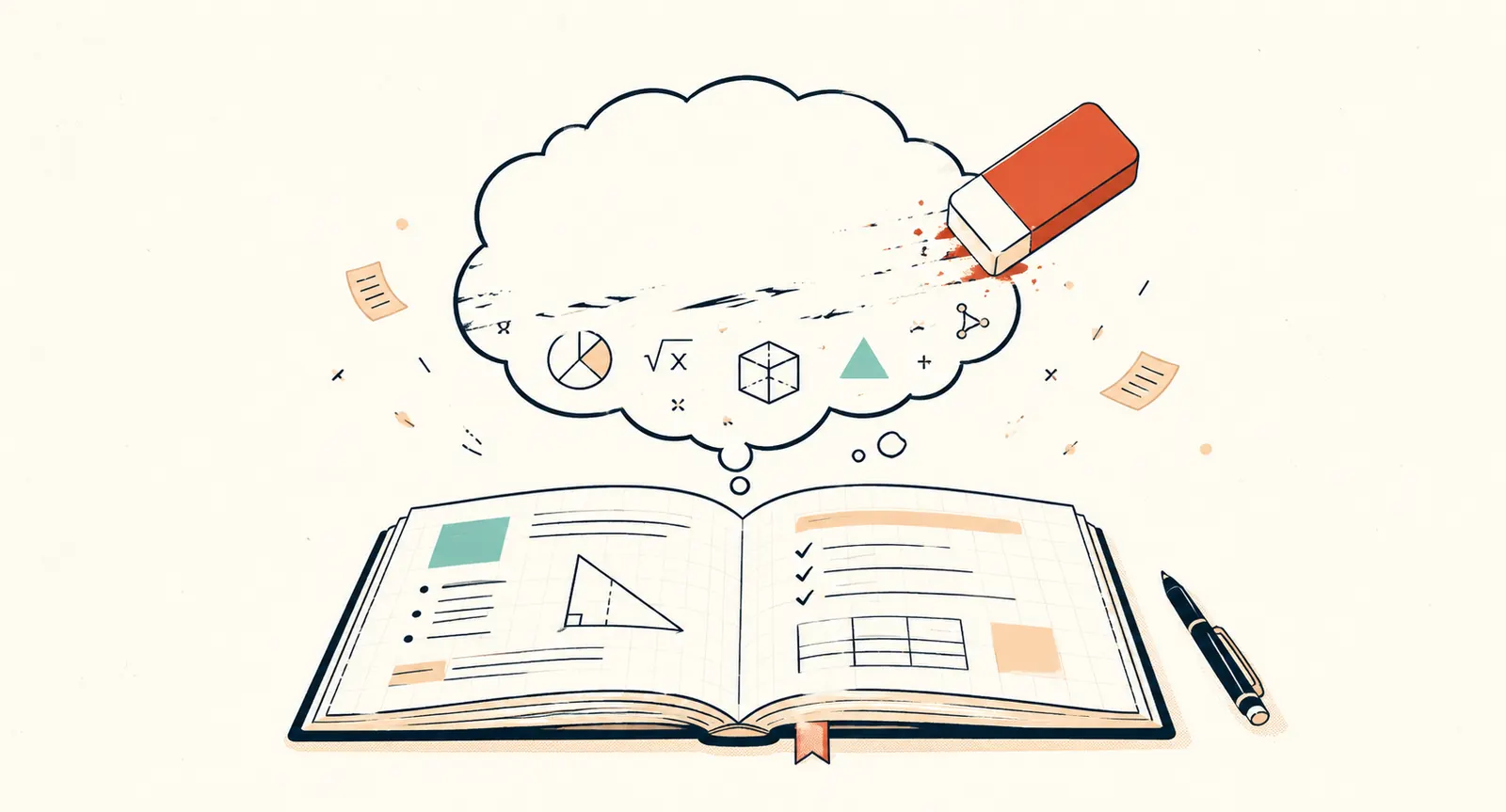
It's Monday morning. Sarah sits at her desk, paper in front of her, calculator ready. She's studied every evening for the past week—flashcards, past papers, worked examples. Maths is supposed to be her strength. But the moment she reads the first question, her mind empties. Not because she doesn't know it. But because her body has decided she's in danger. Her heart races. Her palms sweat. The formulas she recited yesterday? Gone. The method she practised on Friday? Blank.
This isn't a failure of intelligence. Sarah is bright—consistently strong in lessons, confident in class discussions. But something happens between the desk at home and the exam hall that disrupts everything. Or seems to.
Your child might be Sarah. Thousands of students across Singapore—from Pri 4 assessments to JC exams—experience this. They study hard. They understand the material. Then, exam day arrives and they freeze.
The memory paradox: Revision isn't the same as retrieval
Here's what most people don't realise: studying and remembering under pressure are different skills.
When your child revises at home, they're usually re-reading notes, watching explanations, or working through familiar problems. Their brain registers this as "safe"—they're in control, no stakes, no time pressure. The information feels accessible because they just saw it or practised it moments ago.
But memory isn't just about having information. It's about retrieving it quickly, under stress, without external cues. On exam day, they face:
- Questions phrased differently from revision notes
- Time pressure
- The weight of the score
- The absence of their notes, their teacher, or their safety net
This is why two students can study the same content and perform very differently on the day. One has built retrieval strength—knowledge that survives pressure. The other has built familiarity—which evaporates the moment conditions change.
Anxiety and the brain: What actually happens when they freeze
When your child walks into the exam hall, their nervous system doesn't know they're safe. To the amygdala—the brain's alarm system—the exam is a threat. A real threat: performance, marks, future pathways.
Under threat, the body releases cortisol and adrenaline. Blood flows away from the prefrontal cortex (where memory and reasoning live) and toward the primitive brain stem (where fight, flight, or freeze responses happen). This isn't weakness. It's biology.
The irony: the smarter the child, the higher the standards they hold themselves to, the more intense this response can be. When kids freeze during exams, it's often not because they lack knowledge—it's because their nervous system has hijacked their access to it.
This is why some students can breeze through practice papers at home but panic in the real exam. The stakes are different. The feeling is different. And the brain responds accordingly.
The illusion of knowledge
Here's a tough truth: passive revision often creates the illusion of understanding.
Your child reads a concept in a textbook or watches a video explanation. It feels clear. They nod along. They think, "Yes, I understand this." But understanding and being able to recall and apply it under pressure are worlds apart.
When revision is mostly passive—re-reading, highlighting, watching—your child's brain doesn't have to work hard. Working memory (the capacity to hold and manipulate information) stays shallow. They're recognising information rather than retrieving it.
Then the exam asks a slightly different question, and suddenly it doesn't feel familiar. The panic follows.
True confidence isn't feeling you know something. It's knowing you can retrieve and use it under pressure.
Building knowledge that actually survives pressure
So how do you help your child shift from passive revision to active, pressure-proof learning?
Test themselves regularly. Not as punishment, but as practice. Every time they retrieve information from memory—through flashcards, past papers, or informal quizzes—they strengthen that memory. More importantly, they learn how it feels to recall under a bit of pressure.
Practise with incomplete information. At home, they have their notes, their textbook, their teacher's explanations. In the exam, they have only what's in their head. During revision, encourage them to answer questions without looking at notes first. Close the textbook. Try to solve it. Only then check.
Space out revision. Cramming the night before feels productive, but it's one of the weakest forms of learning. Information crammed into short-term memory disappears just as quickly. Spreading revision across weeks builds deeper, more durable knowledge.
Vary the practice. If your child only practises one type of question, they freeze when encountering a variation. Include different question formats, unexpected phrasings, and mixed topics. This teaches the brain to recognise the underlying concept, not just the familiar surface.
Practising under realistic conditions
The closer practice mimics exam conditions, the less shock the real thing delivers.
Encourage your child to sit full past papers under timed conditions, in a quiet space, without interruption. Not every revision session needs this—but some should. This does two things: it teaches their brain to think under time pressure, and it builds confidence because they've proven to themselves they can do it.
Many students also benefit from stress management techniques before and during the exam. Deep breathing, grounding exercises, or a brief moment of self-talk: "I've prepared. I know this. My mind is clear." These aren't distractions; they're tools to keep the nervous system in the thinking zone rather than the panic zone.
Equally important is helping your child develop a growth mindset about exam performance. If they see a blank mind as proof they're not clever, the shame and anxiety compound. If they recognise it as a normal nervous system response to pressure—and something they can train—they're far more likely to stay calm and recover.
Final thoughts
The pre-exam blank isn't a mystery, and it's not a reflection of your child's intelligence. It's the gap between passive knowledge and pressure-ready knowledge. It's a nervous system responding to threat in a way that made evolutionary sense but works against us in modern exams.
The good news: this gap is closeable. With spaced, active, varied revision; with practice under realistic pressure; and with strategies to keep the nervous system calm, your child can build knowledge that doesn't abandon them when stakes rise. They'll walk into the exam hall feeling genuinely prepared—not just familiar with the content, but confident they can retrieve and use it. Learn more about us and discover how we help students build this deeper, pressure-proof understanding.