
Mrs Tan watches her daughter Aisha struggle with fractions during a P4 tuition class. Aisha's classmate breezes through the same problems. Mrs Tan's chest tightens. Why can't Aisha grasp this as quickly? That evening, she scrolls through a parent WhatsApp group. Another parent posts: "My son just topped his Science test!" Someone else shares their daughter's PSLE results. Mrs Tan closes the phone and sighs.
If this feels familiar, you're not alone. Singapore's achievement-focused culture makes comparison almost inevitable. But here's what many parents don't realise: the comparison trap doesn't spur children forward. It quietly blocks them.
The comparison trap is more powerful than you think
Comparison isn't just casual curiosity. It's a belief system that creeps into how you speak to your child, which tuition centre you choose, and how you respond when they come home with a B instead of an A.
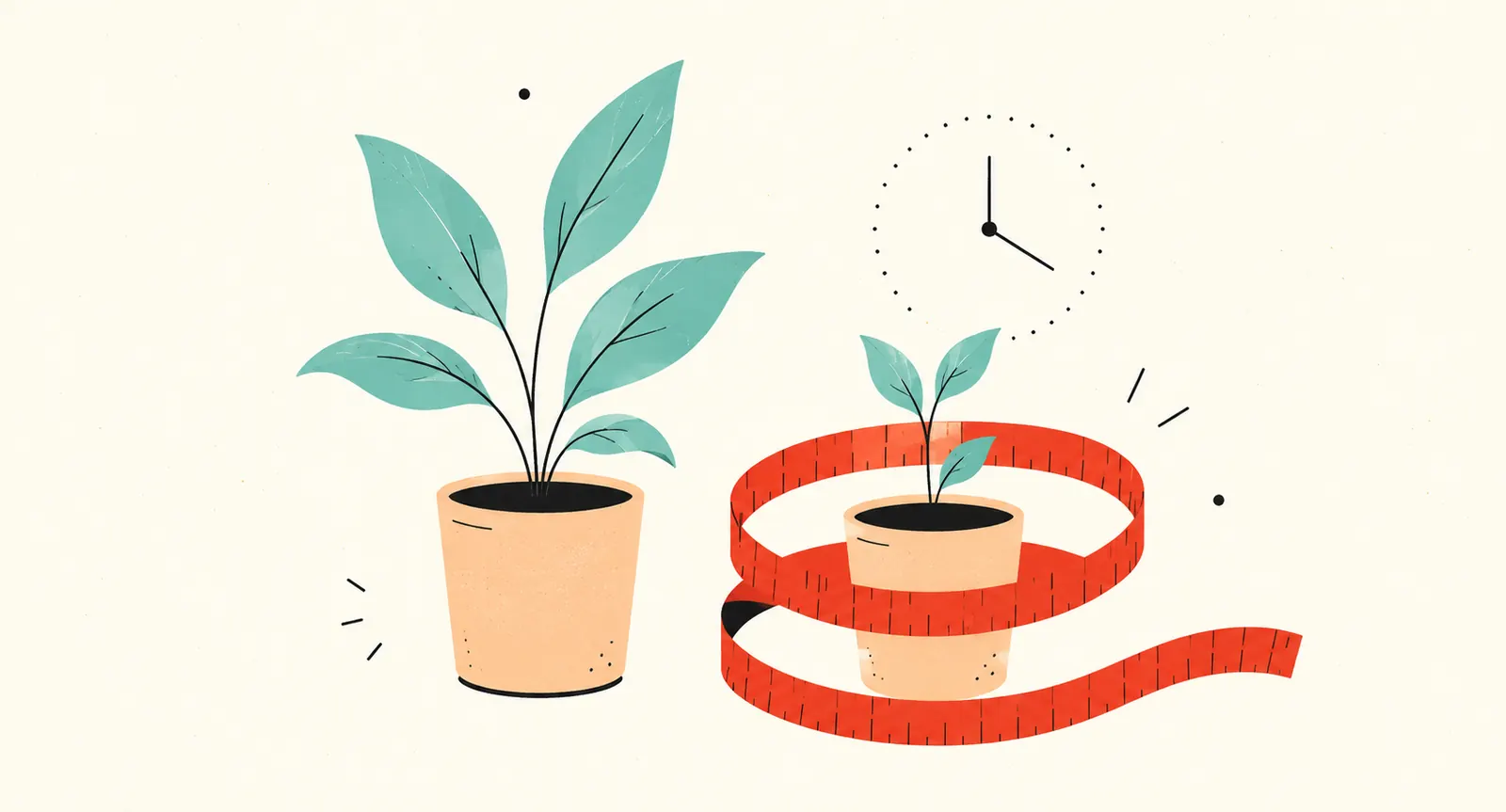
When you compare—your child to a sibling, to a classmate, to the kid down the street—you send a clear message: your progress only matters if it matches someone else's pace. Children internalise this fast. They stop asking "Am I improving?" and start asking "Am I better?" That shift is small but devastating.
The problem deepens in tuition environments, where groups of children learn side by side. Even in smaller classes, comparison happens. Your child notices who finishes the worksheet first, whose hand shoots up for the answer, whose parent talks about tutoring. And you notice too.
Your child's brain isn't on anyone else's timeline
Child development doesn't follow an assembly line. Two children born in the same month can have vastly different cognitive readiness for abstract concepts—especially in subjects like Primary Math tuition and sciences.
Neuroscience shows that neural connections develop unevenly across childhood. The prefrontal cortex—responsible for logic, sequencing, and abstract thinking—matures on different schedules for different children. A child who struggles with fractions at age 9 may suddenly "click" with the concept at 10, and surpass their earlier-proficient peer by 11. The brain doesn't work by straight lines.
- Processing speed varies: Some children need more time to encode and retrieve information. This doesn't reflect intelligence; it reflects neurotype.
- Learning styles differ: A child who learns best through movement or discussion may look slower on paper-based assessments, but will excel once teaching method matches their style.
- Motivation timing is individual: Intrinsic motivation to master a subject often arrives later for some children, triggered by discovery or personal relevance, not by external pressure.
When you internalise this, the WhatsApp group posts feel less like verdicts and more like snapshots. They tell you where another child is right now, not where your child will be in two years.
Early progress isn't always predictive
One of the cruelest myths in education: the child who learns fastest in primary school will always learn fastest. Not true.
A child who grasps PSLE Science concepts early often does so because the content matches their concrete, observation-based thinking. But as Science becomes more conceptual in Secondary—requiring abstract reasoning about molecular structures, energy transfers, and invisible forces—that early advantage can flatten. Meanwhile, a child who struggled in P6 may suddenly flourish when the subject becomes more theoretical.
The same happens with Maths. Arithmetic speed (which favours some children naturally) doesn't predict algebraic thinking. Pattern recognition, not quick recall, becomes the winning skill by Secondary.
Your child's progress isn't a fixed lane. It's a branching path.
The hidden cost of constant comparison
What does chronic comparison actually do to a child?
It teaches them to view effort as evidence of inadequacy. If you keep saying, "Your friend learned this faster—why can't you?" your child hears: there's something wrong with you. That belief sticks. By Secondary, many children have internalised the idea that if they need to work harder than their peers, they're not actually capable. So they stop trying.
Comparison also divorces your child from the joy of learning. Learning science should involve curiosity and discovery. Learning maths should include the satisfaction of solving a problem. But when every lesson becomes a measured race, the internal reward system shuts down. Your child learns to please you, not to discover.
This is especially damaging in subjects that require persistence. Mathematics and science are cumulative; gaps compound. A child who gives up in frustration at P5 because they believe they're "not a maths person" won't suddenly turn it around for PSLE Math tuition or Secondary. The belief hardens first.
Reframing what progress really means
Progress isn't a single metric. It's not the percentage on a test or the position in class. Progress is:
- Understanding something today that you couldn't grasp yesterday.
- Trying a problem a different way after the first approach didn't work.
- Asking a thoughtful question instead of giving up.
- Feeling more confident tackling a topic you used to avoid.
These are quieter victories than topping the class. But they're the ones that build capable, resilient learners.
Celebrating progress, not perfection, isn't just motivational jargon—it's how you rewire your child's relationship with learning. When you notice effort, strategy, and growth, your child internalises a growth mindset. When you notice only outcomes and comparisons, they internalise a fixed mindset. The research is clear on which one leads to long-term success.
Three strategies that actually work
First: Create a comparison-free zone at home. Don't ask, "How did your friend do?" Ask, "What was challenging today? What did you figure out?" Use quality time to step into your child's world, not to audit their performance against peers.
Second: Talk to yourself first. When you feel the comparison urge—seeing another parent's post, hearing about another child's achievement—pause. Ask: Does this information help my child? Rarely does it. It mostly serves your anxiety. Notice that and let it go.
Third: Track individual progress, not relative progress. Keep a simple record of your child's achievements over time: problems they can now solve, concepts they've grasped, books they've read. Compare your child to themselves six months ago. This is the comparison that matters.
Final thoughts
Parenting in Singapore often feels like you're supposed to optimise every lever at once: the right tuition centre, the right practice schedule, the right environment. But the most important lever isn't external. It's how you frame your child's journey.
Your child doesn't need to match your neighbour's timeline. They need to trust that you believe in their path, even when it looks different. They need to know that struggling doesn't mean failing, and that progress—their progress, measured by their growth—matters to you.
That's the foundation everything else rests on. Learn more about us and how we support each child as an individual learner.