
Your daughter nods confidently. "Yes, Mum, I understand." You feel relief wash over you. The tuition seems to be working. Then the PSLE paper comes back, and half the fraction questions are marked wrong. When you ask her what went wrong, she stares at the page as if she's never seen fractions before. "But I thought I understood," she says, genuinely bewildered.
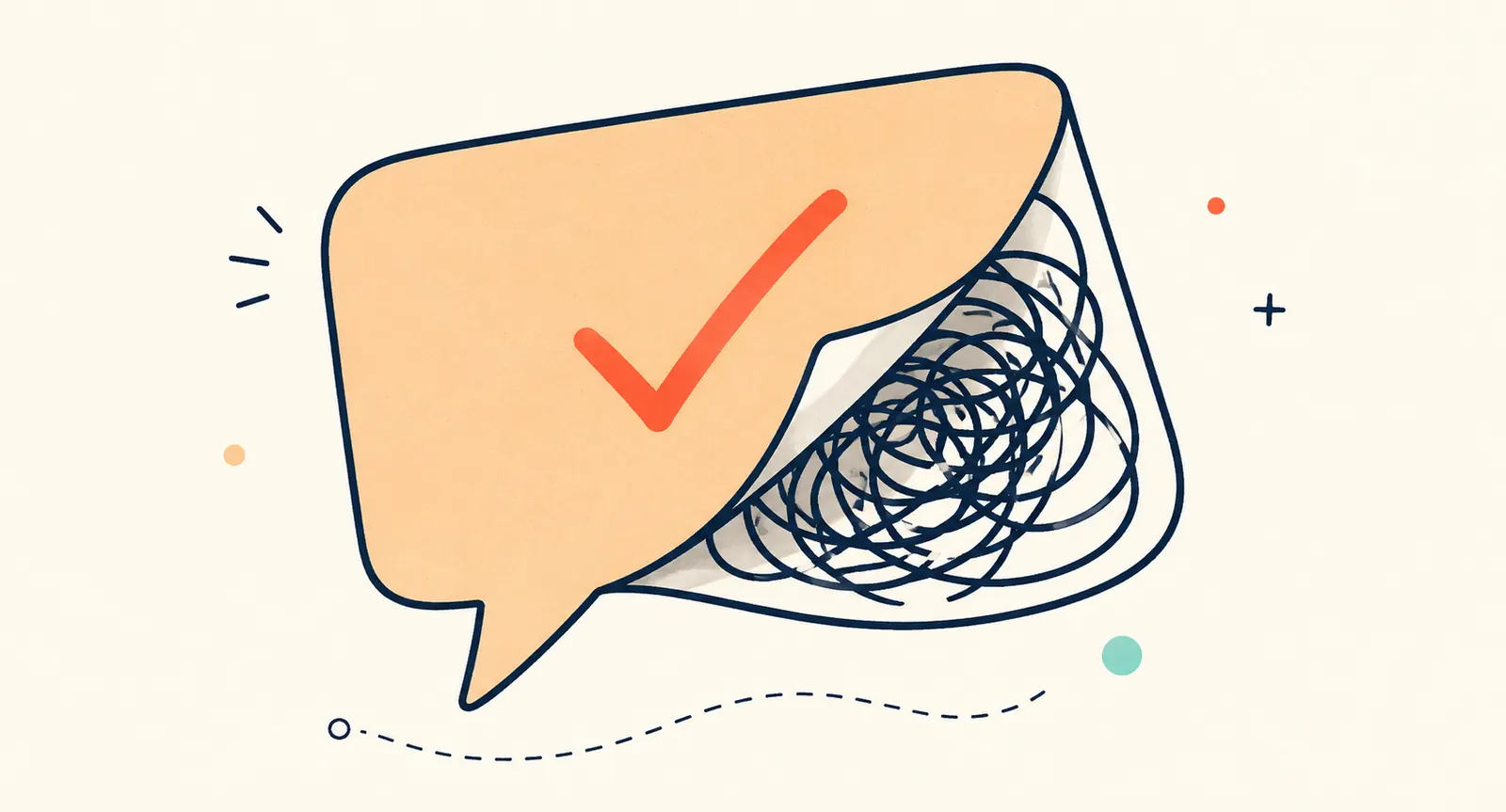
This moment—the gap between feeling confident and actually understanding—is where many learning problems hide. A nod, an "I get it," or even a correct answer on homework doesn't necessarily mean your child has grasped the concept. They might have memorised a method, guessed the pattern, or simply been eager to move on. And because they feel like they understand, they don't know what to revise.
In Singapore's education system, this matters deeply. Concepts in Math and Science build relentlessly. A weak foundation in algebraic thinking in P5 doesn't just hurt at PSLE—it compounds through Sec 1, Sec 2, and right up to G3 and beyond. The earlier you spot false confidence, the sooner you can address it.
Why understanding is not the same as knowing the answer
Your child can get a question right and still not understand it. They might have memorised the steps, spotted a pattern, copied from a friend, or made a lucky guess. Understanding means they can explain why something works, apply it to a new problem, and adapt their method if circumstances change.
Understanding means they can explain why something works and adapt when circumstances change.
Knowing the answer isn't the same as understanding the concept—and this distinction becomes critical as your child progresses. A child who memorises can pass some tests. A child who understands can learn independently, troubleshoot their own mistakes, and build confidence that sticks.
Five signs your child is guessing, not grasping
Here's how to tell the difference when they say they understand:
- They can't explain it in their own words. Ask them to describe what they've just learned to someone else—a younger sibling, a friend, you. If they parrot back the textbook word-for-word, that's recall, not understanding. Real understanding means they can simplify, give examples, and translate it into their own language.
- They panic when you change one number. Say your child solved a fraction problem: 3/4 + 1/4. They got it right. Now change it slightly: 3/4 + 1/8. Do they freeze? Say they can't do it because it's "different"? That's a sign they didn't grasp the underlying logic—they memorised the steps for that specific problem.
- They memorise the method, not the concept. Listen carefully: do they say "I do this, then I do that" or "I do this because"? The word "because" signals understanding. If they're always following a checklist without knowing why each step matters, they're fragile. One tiny variation and they're lost.
- They say "I forgot" when they mean "I never understood." There's a difference. Forgetting is normal—you revise. But if your child forgets a concept every time they come back to it, they didn't understand it in the first place. Real understanding doesn't vanish after a week; it's retrievable because it's anchored in logic.
- They avoid practising it. A child who understands something is usually willing to try new problems, even hard ones. A child who feels shaky but doesn't want to admit it will avoid the topic, change the subject, or insist they're "tired." Fear masquerades as indifference.
How to test understanding yourself
You don't need a tutor to spot false confidence. Here's how:
Ask "why". After your child solves a problem, ask "Why did you do it that way?" Not in an accusatory tone—genuine curiosity. Their answer will tell you everything.
Ask them to teach you. Request that they explain it to you as if you don't understand. If they struggle, backtrack, or resort to vague hand-waving, that's your signal.
Change the problem slightly. Same concept, different numbers or context. Can they adapt, or are they lost?
Wait a week and ask again. Can they remember and re-explain it? Or has it evaporated?
Out-loud learning—asking your child to explain problems aloud—cements understanding in a way silent studying never does. Use it as both a teaching tool and a diagnostic tool.
What to do if you spot false confidence
If you've noticed these signs, resist the urge to panic or blame your child. Their confident nod was genuine from their perspective. Instead:
- Go back to basics. Don't push forward to harder problems. Revisit the foundation. Sometimes it takes a different explanation, a concrete example, or a visual model to unlock understanding.
- Slow down. One clear concept is better than five half-understood ones. In upper primary Math tuition, skilled tutors focus on depth over speed—the opposite of rushing through content.
- Use active learning. Stop passive reading and listening. Get your child to draw, explain, build, manipulate. Active learning is messier but far more effective.
- Celebrate the discovery, not the shame. When your child realises they didn't actually understand, that's progress. It's uncomfortable, but it's progress. Praise them for being honest about the gap.
When to seek outside help
Sometimes a parent's explanation, no matter how patient, doesn't click. A tutor or Science tuition programme can offer a fresh voice, a different approach, and the space for your child to ask questions they might feel shy asking you. There's no shame in this. What matters is that real understanding gets built, not that it's built at home.
Final thoughts
A confident nod feels good in the moment. But real learning is quieter, messier, and slower. It involves confusion, questions, even frustration—because understanding requires thought. Your job isn't to eliminate these uncomfortable feelings; it's to help your child sit with them long enough to push through to clarity.
Watch for the signs. Ask the hard questions. Slow down when you need to. And remember: the goal isn't a nod of false confidence. It's a child who genuinely understands, who can think independently, and who knows the difference between the two. Learn more about us and how Genie Education Hub supports deep, lasting understanding in Math and Science.